
New Phase 3 Evidence
From the ROADS Randomized Controlled Trial

GammaTile® tile-based
radiation therapy (TBRT) demonstrates
improved patient outcomesimproved
patient
outcomes
compared to standard of care: resection + post-operative
stereotactic radiation therapy (SRT).1
patient
outcomes
Key Finding1
As Presented at the 2026 ASCO® Meeting (Late-breaking Abstract)
Immediate, targeted radiation at the time of surgery
reduces the risk of recurrence or death by >50% vs. standard of care1
HR: 0.48, p=0.0021
Co-Primary Endpoints
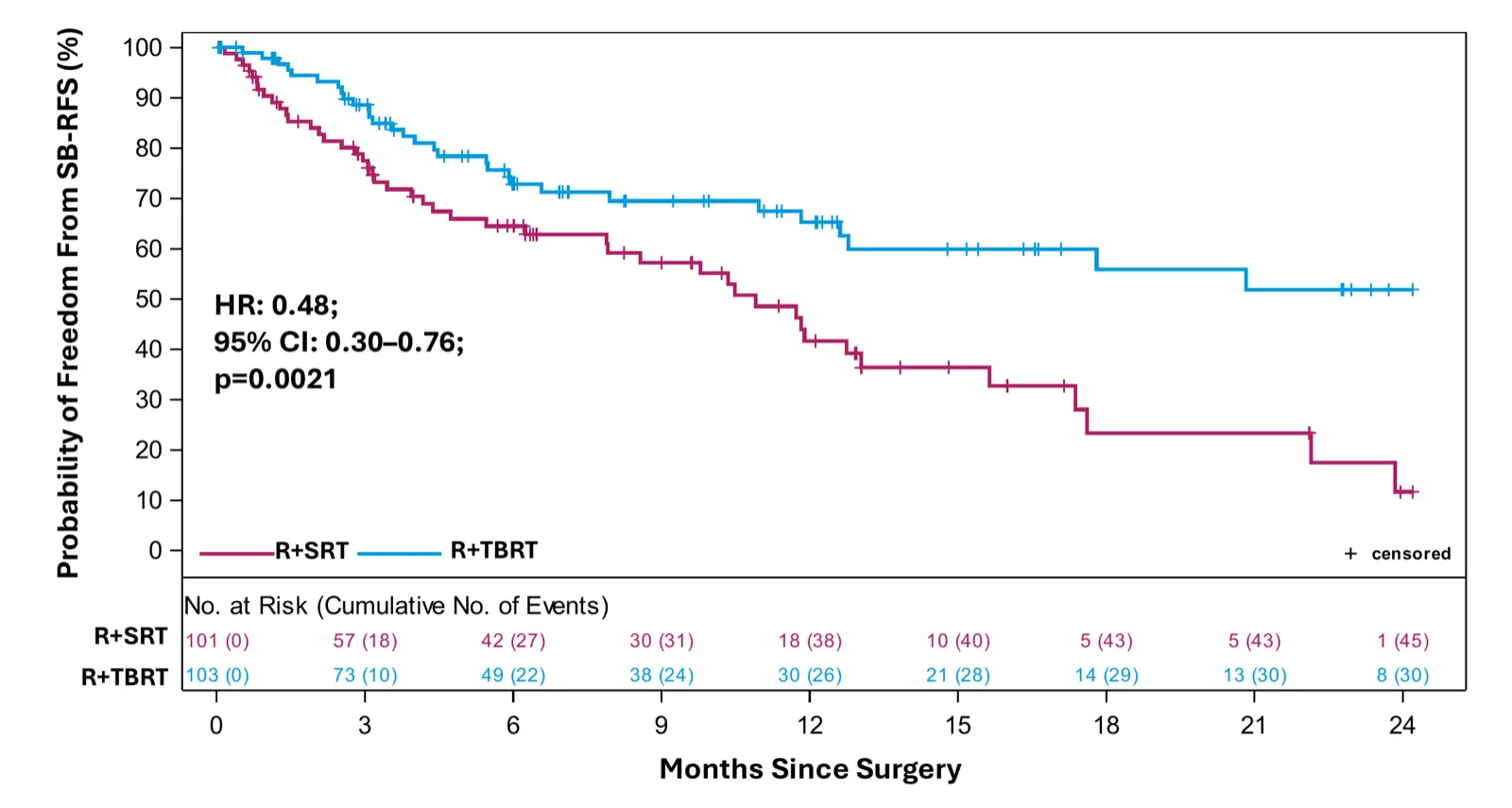
Surgical Bed Recurrence-Free Survival
(HR: 0.48; 95% CI: 0.30–0.76; p=0.0021)1
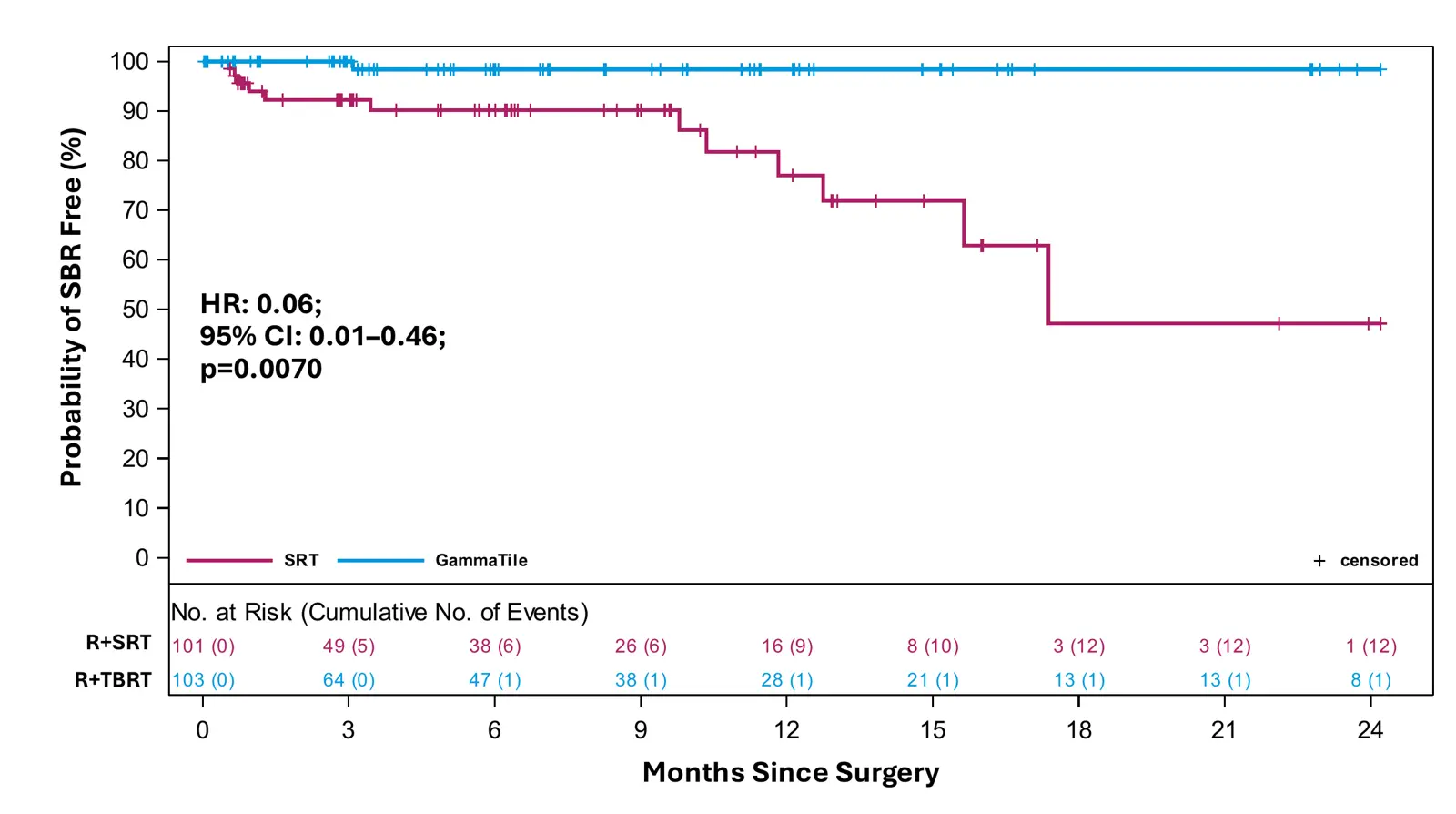
Time to Surgical Bed Recurrence
(HR: 0.06; 95% CI: 0.01–0.46; p=0.0070)1
Secondary Endpoints
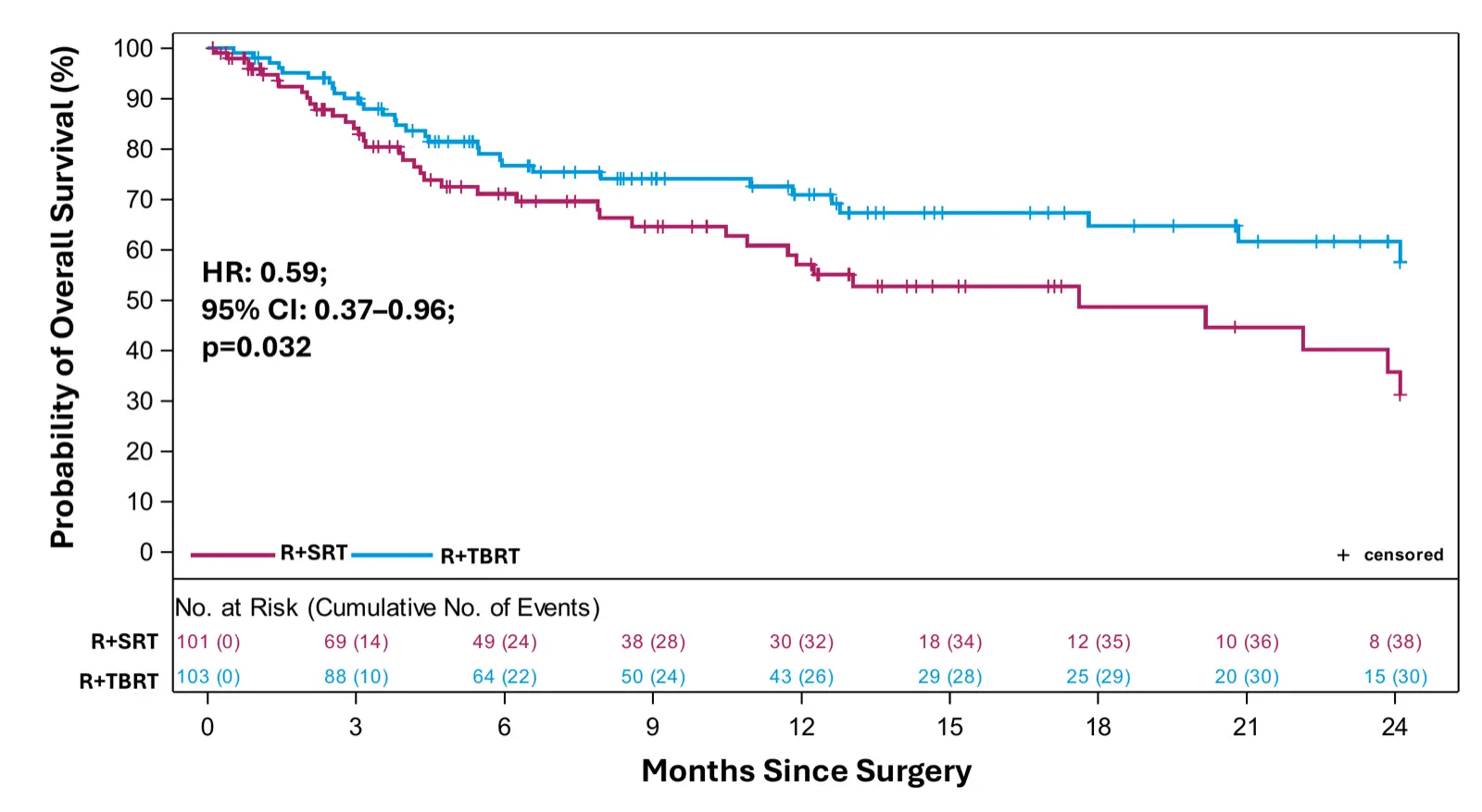
Overall Survival
(HR: 0.59; 95% CI: 0.37–0.96; p=0.032)1
Safety
RN, LMD, ≥ Grade 3 TRAE1
GammaTile demonstrates
superior efficacycompared to standard of care1
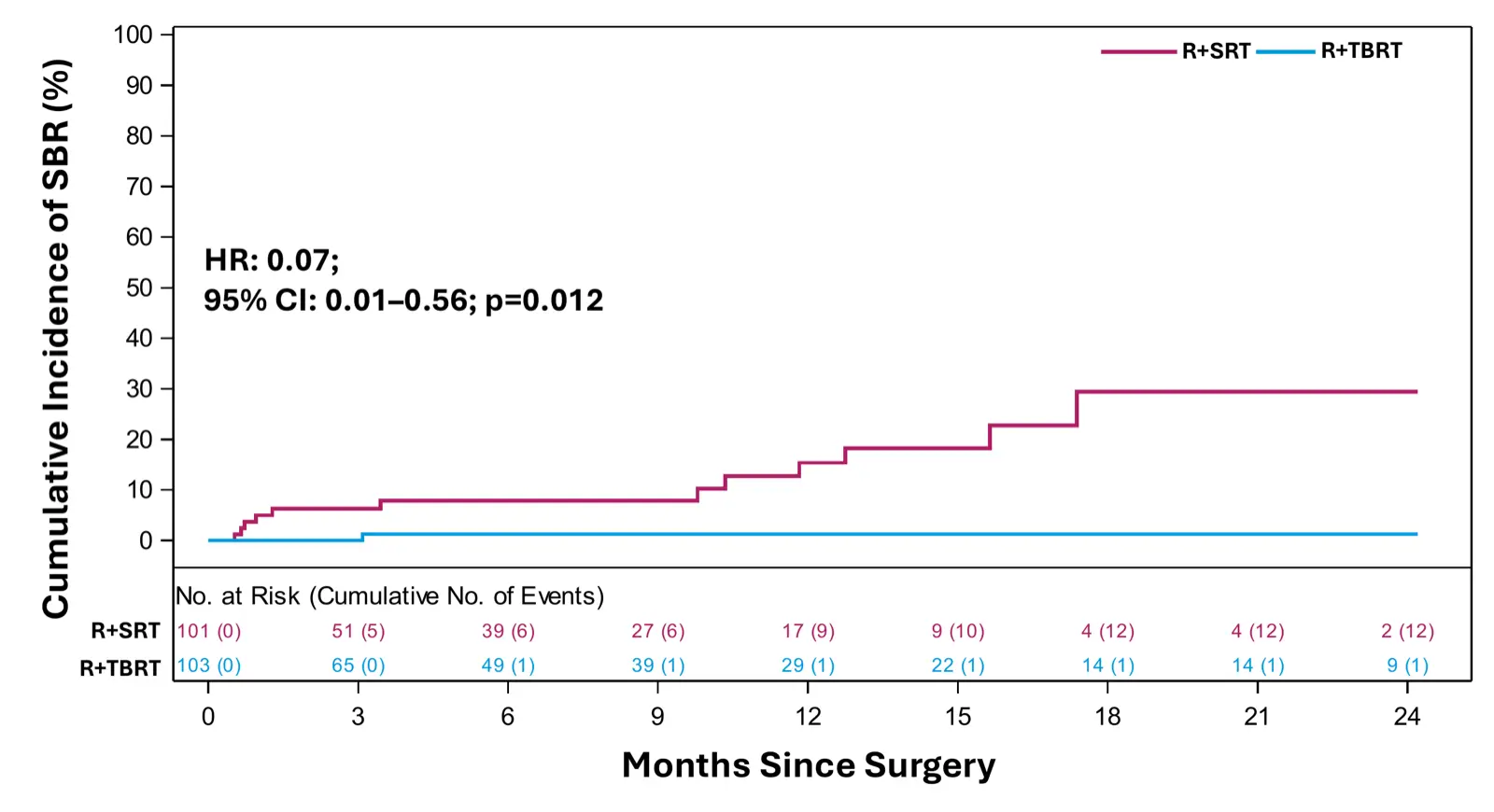
Cumulative incidence of surgical bed recurrence
at 12 months
HR: 0.07; 95% CI: 0.01–0.56; p=0.012
Co-Primary Endpoints
GammaTile demonstrated superior time to surgical bed recurrence (SBR)1
Time-to-SBR = Time from surgery to SBR
Median time to SBR
HR: 0.06; 95% CI: 0.01–0.46; p=0.0070
GammaTile demonstrated superior surgical bed
recurrence-free survival (SB-RFS)1
SB-RFS = Time from surgery to either SBR or death from any cause, whichever occurred first
Median SB-RFS
HR: 0.48; 95% CI: 0.30–0.76; p=0.0021
Secondary Endpoints
Overall survival (OS) was longer with GammaTile1
OS = Time from surgery to death from any cause
Median OS
HR: 0.59; 95% CI: 0.37–0.96; p=0.032
Safety1
There were no statistically significant differences among safety endpoints1,2
| p-value | R + TBRT | R + SRT | |
|---|---|---|---|
| Radiation necrosis (RN)1 | p=0.76 | 5.3% | 5.7% |
| 24-mo probability of being alive without LMD2 | p=0.10 | 57.7% | 35.9% |
| Leptomeningeal disease (LMD)2 | p=0.14 | 9.7% | 3.0% |
| All ≥ Grade 3 treatment-related adverse events (TRAEs)1 | NR | 20.0% | 21.7% |
| Radiation necrosis (RN)1 p-value: p=0.76 R + TBRT: 5.3% R + SRT: 5.7% |
| 24-mo probability of being alive without LMD2 p-value: p=0.10 R + TBRT: 57.7% R + SRT: 35.9% |
| Leptomeningeal disease (LMD)2 p-value: p=0.14 R + TBRT: 9.7% R + SRT: 3.0% |
| All ≥ Grade 3 treatment-related adverse events (TRAEs)1 p-value: NR R + TBRT: 20.0% R + SRT: 21.7% |
Study Design1

Patients enrolled:
Total enrollment: 230
mITT population: 204*

Total sites:
Multi-center, 32

Median resected tumor diameter,
cm (range)
TBRT: 3.20 (2.0–6.1)
SRT: 3.25 (2.1–5.8)

Mean number of brain metastases,
(standard dev)
TBRT: 1.8 (1.13)
SRT: 1.8 (1.23)

SRT Arm Fractions:
1: 7.8%
3-5: 92.2%
- Time-to-surgical bed recurrence (time-to-SBR)
- Surgical bed recurrence-free survival (SB-RFS)
- Overall survival (OS)
- Functional status (KPS, Barthel-ADL)
- Quality of life (FACT-Br)
- Adverse events
- Development of leptomeningeal disease (LMD)†
- Assessment of radiation necrosis (RN)
- Factors that cause delays in SRT
* Pre-specified modified intent-to-treat (mITT) population was used for efficacy analyses. mITT = patients who had surgery, pathologic confirmed metastasis, any follow up information
** SBR = radiographic evidence of new or progressive contrast-enhancing metastasis within the surgical bed
† All reported SBR and LMD confirmed by central review by two independent neuroradiologists
ROADS Protocol1
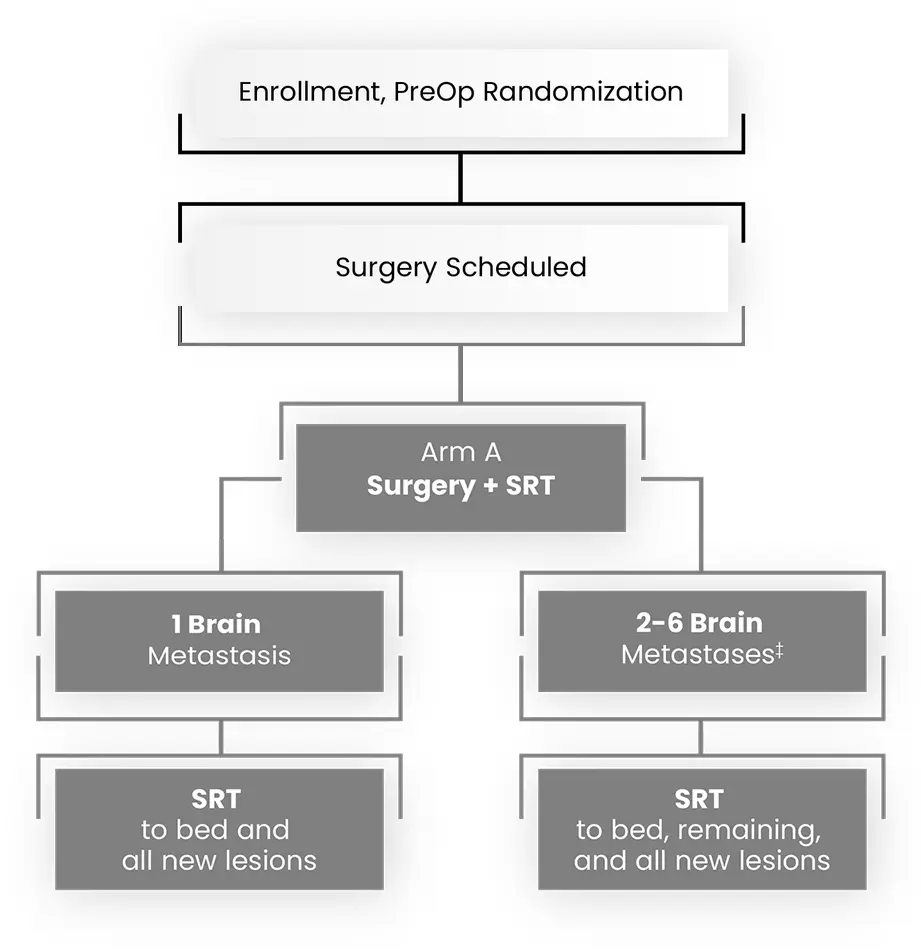
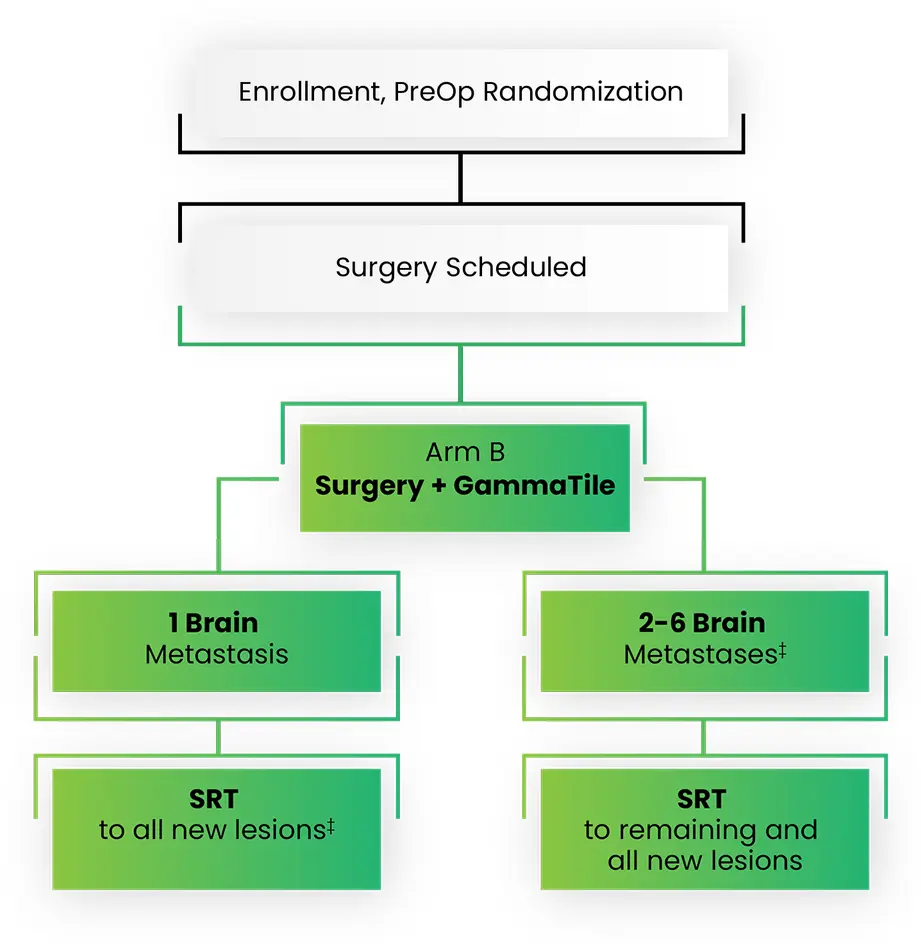
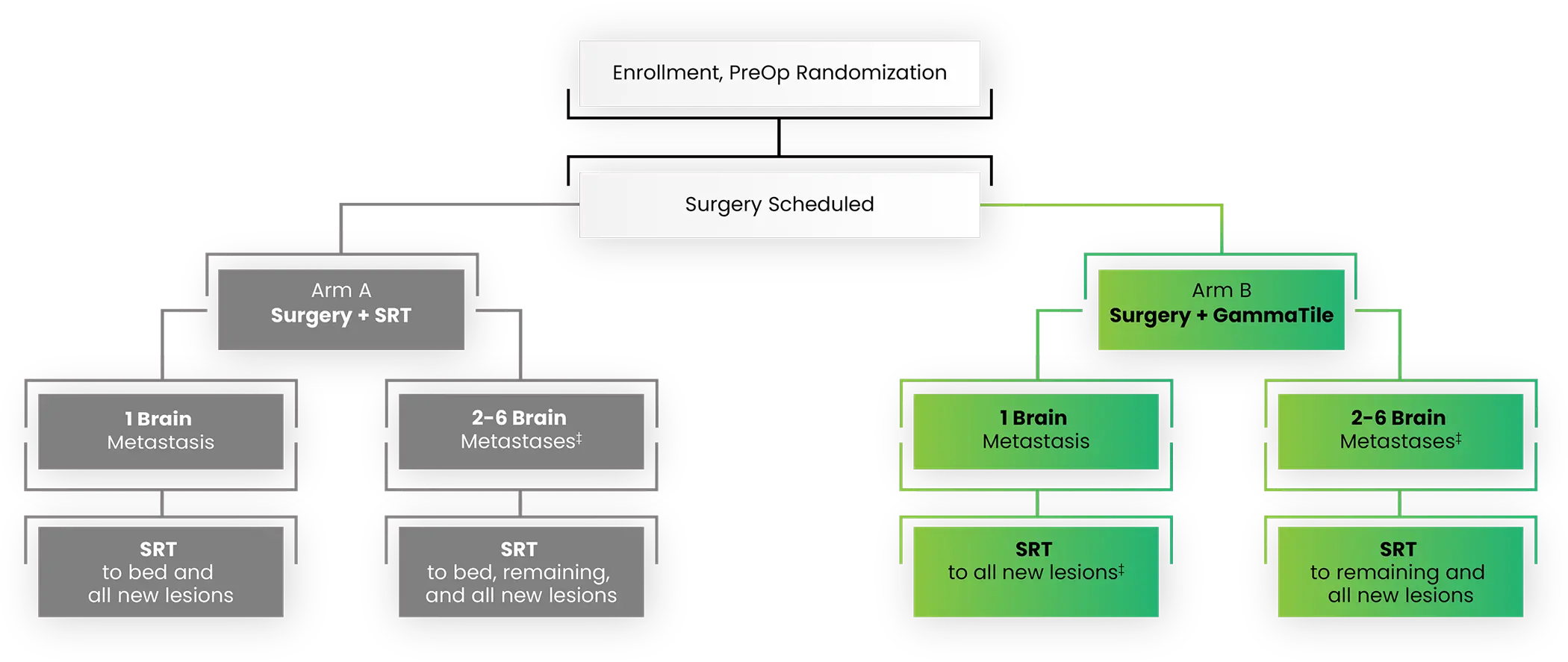
‡ Note: Study participants in both arms may have additional brain tumors that are not suitable for surgical removal (1-5 additional non-surgical brain metastases). These remaining tumors will be treated with SRT. SRT = Stereotactic Radiation Therapy